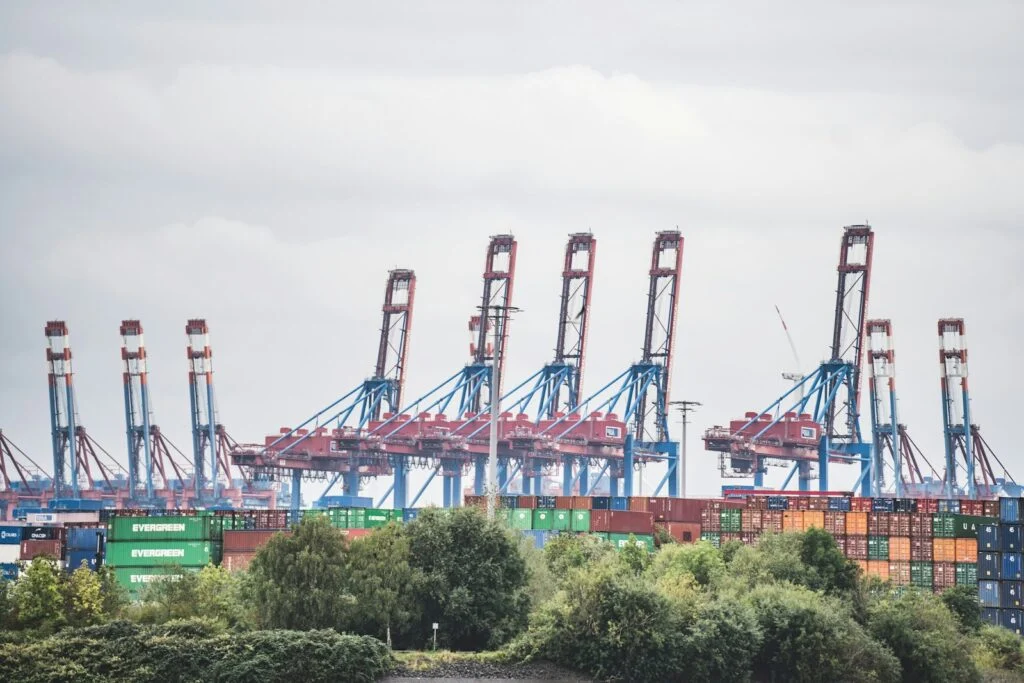
Sea freight from Asia to Hamburg
Full containers and shared-container shipments from China, India and Pakistan to the Port of Hamburg, and exports from Germany worldwide. We book the space, handle the paperwork and arrange delivery.
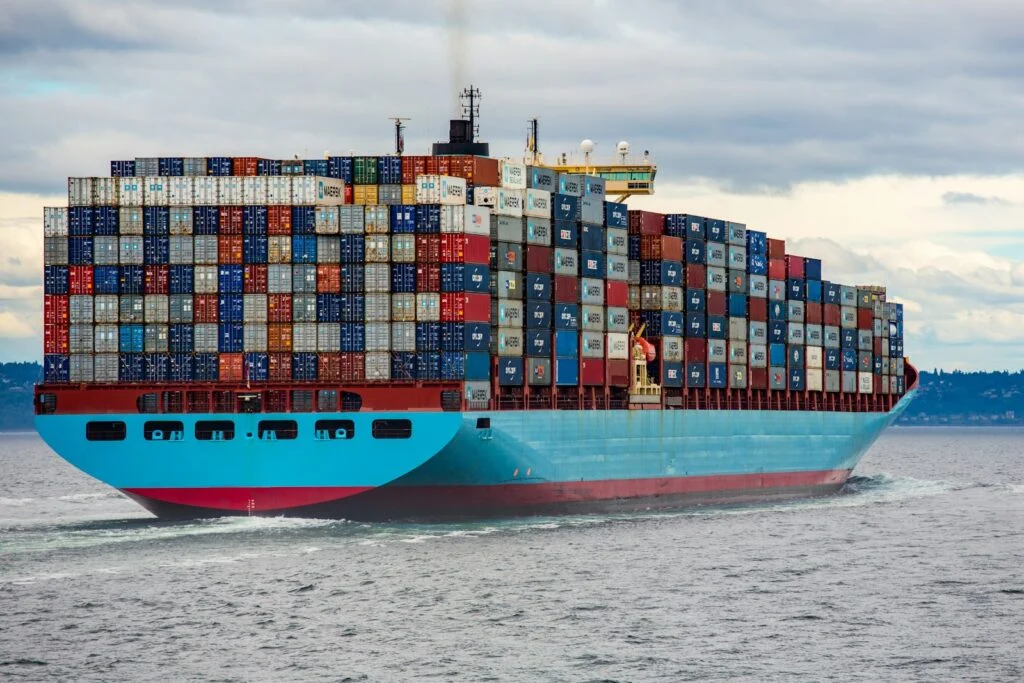
FCL or LCL
A container to yourself
The container is loaded and sealed at your supplier’s premises and stays closed until it reaches you. Less handling, and usually a shorter transit than LCL.
A share of a container
Your cargo travels with other shippers’ goods. It is consolidated at a warehouse near the origin port and separated again in Hamburg. You pay for the space you use.
Where the break-even usually sits
LCL is charged per cubic metre or per 1,000 kg, whichever is greater. Each LCL shipment also carries its own handling charges at both ends. Because of that, at around 13 to 15 cubic metres a 20-foot container often becomes cheaper than LCL, even if you don’t fill it. Send us the volume and weight and we’ll quote both ways.
Container types
Internal volumes are approximate.
- 20GP (20-foot standard)
- About 33 cubic metres. The usual choice for dense, heavy cargo.
- 40GP (40-foot standard)
- About 67 cubic metres.
- 40HC (40-foot high cube)
- About 76 cubic metres. Roughly 30 cm taller inside than a standard container.
- Reefer and open top
- On request, for temperature-controlled goods and for cargo too tall to load through the doors.
Lanes we handle
Our main import lanes run from China, India and Pakistan to Hamburg. The ranges below are port to port and depend on the carrier, the number of port calls and any transhipment on the way.
- China (Shanghai, Shenzhen, Guangzhou) to Hamburg
- Typically 30 to 40 days via the Suez Canal.
- India (Nhava Sheva/JNPT, Mumbai, Chennai) to Hamburg
- Typically 25 to 35 days via the Suez Canal, depending on the port.
- Pakistan (Karachi) to Hamburg
- Typically 28 to 40 days via the Suez Canal. Cargo from Lahore moves overland to Karachi first.
When carriers route ships around the Cape of Good Hope instead of through Suez, add roughly 10 to 14 days. We tell you which routing applies when we quote.
Details for each lane: Shanghai, Shenzhen, Nhava Sheva and Karachi to Hamburg, or see all trade lanes.
From booking to delivery
Booking and pickup
We book space with the carrier and agree a loading date with your supplier. An empty container goes to the factory, or LCL cargo is delivered to the consolidation warehouse.
Export customs and loading
The goods are cleared for export in the origin country and delivered to the terminal before the vessel’s cut-off.
Ocean transit
The carrier issues the bill of lading. We track the vessel and tell you if the arrival date moves.
Import customs in Hamburg
We prepare the import declaration before the ship arrives. Import duty and import VAT are assessed on the declaration.
Delivery
A truck collects the container or the unpacked LCL cargo and delivers it to your address in Germany or elsewhere in the EU.
Documents for a sea shipment
- Commercial invoice
- Seller, buyer, goods description, value, currency and Incoterm. Customs uses it to work out duty.
- Packing list
- Number of packages, weights and dimensions.
- Bill of lading or sea waybill
- The carrier’s transport document. With an original bill of lading the cargo is released against the original or a telex release. A sea waybill needs no original.
- Certificate of origin
- Where needed, for example to claim a reduced duty rate under a preference scheme.
- ENS data under ICS2
- The entry summary declaration, which is safety and security data filed with EU customs before loading. It needs an accurate goods description and the HS code.
What happens at the Port of Hamburg
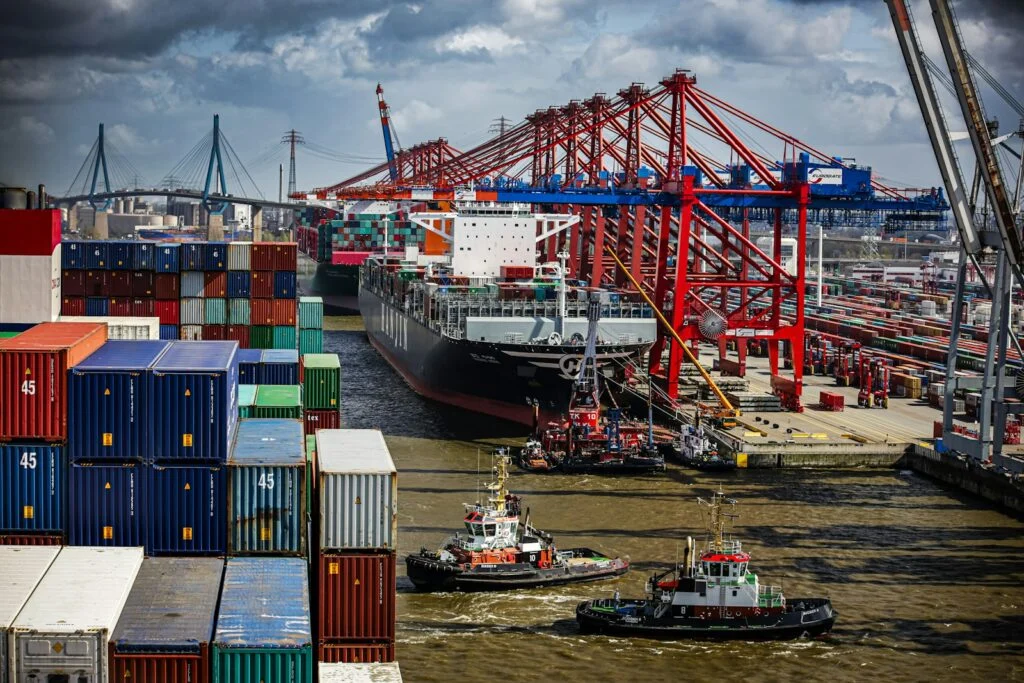
After arrival the container is discharged from the vessel and stacked at the terminal. Before it can leave, two releases are needed: the shipping line’s, once freight is paid and the bill of lading is surrendered, and the customs release.
The terminal and the shipping line each allow a number of free days. After that, charges apply. Demurrage is what the shipping line charges for each day a full container stays in the terminal beyond the free time. Detention is charged for each day you keep the container outside the terminal beyond the free time, until the empty is returned.
Complete documents before arrival are the way to avoid both. See customs clearance in Germany.
Container sizes, drawn to scale
Nominal internal volume. Usable space is lower once cargo is packed.
Common questions about sea freight
How much cargo do I need for a full container?
There is no minimum. Once you’re at around 13 to 15 cubic metres, a 20-foot container is often cheaper than LCL, so ask for both quotes.
Do I need an EORI number to import?
Yes. Every business importing into the EU needs an EORI number, which identifies it to customs. In Germany it is issued by the customs administration free of charge.
Can you collect from my supplier’s factory?
Yes. Tell us the Incoterm you agreed with the supplier. Under EXW or FCA we arrange the pickup. Under FOB the supplier delivers to the port.
Is my cargo insured during the voyage?
Not automatically. The carrier’s liability is limited by law and often far below the value of the goods. Take out cargo insurance for the full value before the goods leave the factory.
Can you deliver beyond Hamburg?
Yes, by truck across Germany and the EU. See road freight in Germany and the EU.
Get a sea freight quote
Send us the origin port, cargo volume and weight, and the Incoterm. You’ll have an itemised quote within 24 business hours.