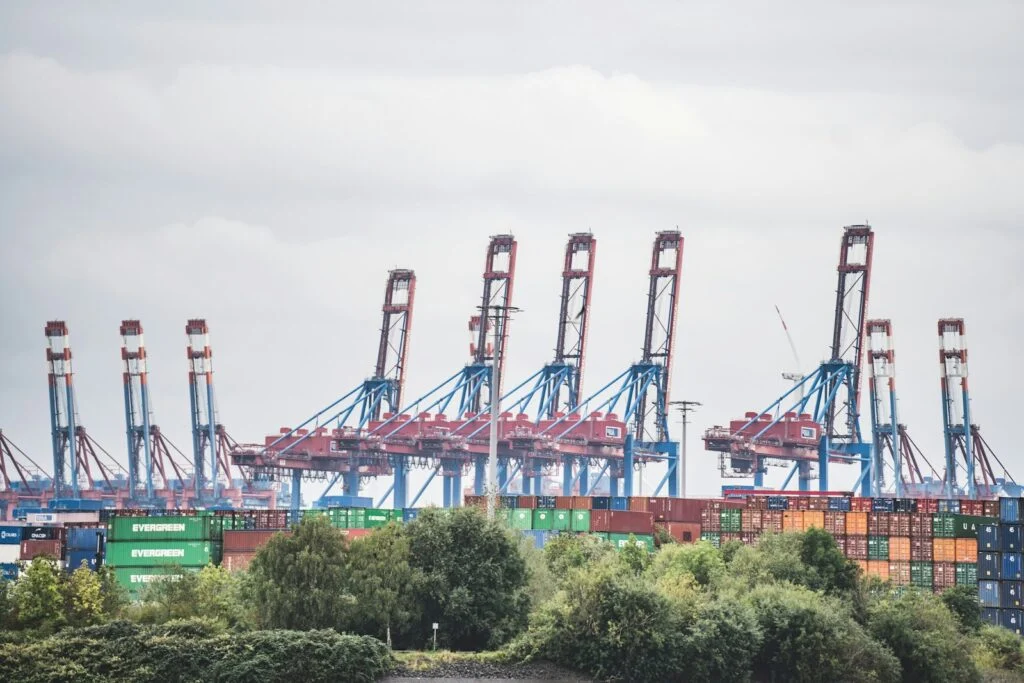
Warehousing in Germany
Storage for imported goods between the port and your customers, cleared or uncleared. We also label, repack and send orders on by road across the EU.
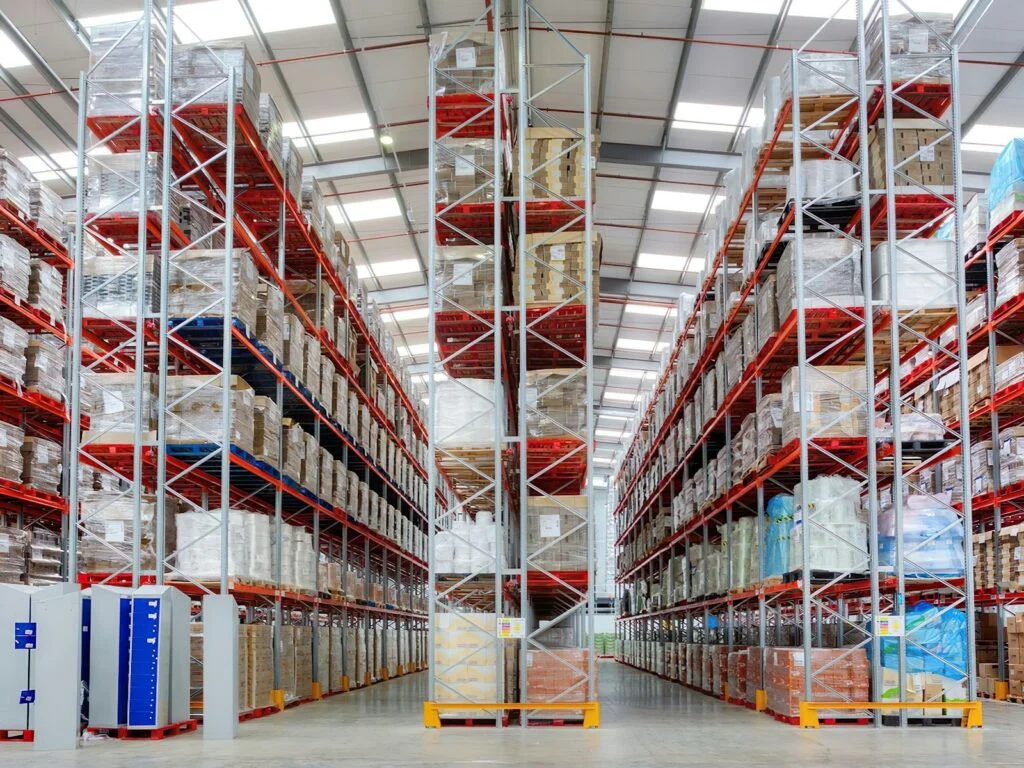
Standard or bonded storage
The difference is the customs status of the goods while they sit on the shelf.
Standard warehousing
For goods already in free circulation, meaning duty and import VAT have been paid or the goods were made in the EU. You can sell and ship them at any time with no further customs step inside the EU.
Customs (bonded) warehousing
For non-EU goods that have not been cleared yet. They stay under customs supervision, every movement is recorded, and duty and import VAT fall due only when you release them.
How a customs warehouse helps your cash flow
If you clear a full container on arrival, you pay duty and import VAT on all of it at once, even if the stock takes six months to sell. In a customs warehouse both charges are suspended. You release goods in the quantities you need and pay only for what you release.
Goods that leave the EU again are never charged at all. If part of your stock goes on to customers in Switzerland, the UK or Norway, you re-export it from the bonded warehouse and no EU duty or import VAT is paid on it.
The declarations in and out of the warehouse are handled by our customs team. See Customs clearance in Germany for the procedures.
Work we do on your goods
Labelling
Barcode, carton and pallet labels, plus product stickers where needed.
Repacking
Breaking down export cartons into sales units, or replacing cartons that were damaged in transit.
Palletising
Loose-loaded cartons from the container are built onto pallets, wrapped and labelled to your customer’s height and weight limits.
Quality checks
Counting, checking for transit damage and photographing anything that looks wrong, before the goods go further.
Kitting
Combining several items into one set or bundle with its own SKU (stock keeping unit).
From container to delivery
Container arrives and is unloaded
The container comes from the Hamburg terminal by truck. We check the seal number against the bill of lading and unload.
Goods are checked and booked in
Cartons are counted against your packing list. Shortages and damage are reported to you with photos, and stock is booked in by SKU.
Storage
Goods are stored on pallets or as cartons. Bonded stock is kept and recorded separately from cleared stock.
Picking and shipping
You send an order. We pick, pack, clear the goods if they are bonded, and hand them to the carrier.
Cross-docking and EU distribution
Not everything needs to be stored. In cross-docking, a container is unloaded, the goods are sorted by destination and loaded onto trucks straight away, usually within a day or two.
Onward delivery goes by road, as part loads (LTL) or full trucks (FTL), within Germany and to other EU countries. Cleared goods travel inside the EU without another customs declaration. Details are on our Road freight in Germany and the EU page.
How a customs warehouse works
Common questions about warehousing
How long can goods stay in a customs warehouse?
EU customs law sets no general time limit for the customs warehousing procedure. In practice the storage cost decides how long it makes sense.
Can I release only part of a consignment?
Yes. You can release single pallets or cartons, and duty and import VAT are paid only on the quantity released.
How is storage normally charged?
Warehouses usually charge per pallet space or cubic metre per week or month, plus handling in and out and any extra work such as labelling.
Can you store hazardous or temperature-sensitive goods?
That depends on the hazard class, the quantity and the temperature range. Tell us before you ship, with the safety data sheet, and we’ll confirm what is possible.
What we need from you
- SKU list
- Each article with its description, barcode if it has one, and units per carton.
- Pallet or carton dimensions
- Length, width, height and gross weight, and whether pallets can be stacked.
- Expected volumes
- Containers or pallets per month inbound, orders per month outbound, and how long stock usually stays.
- Special requirements
- Any hazardous goods, temperature limits, or goods that must stay under customs control.
Tell us what you need to store
Send your SKU list and expected volumes. You’ll get an itemised quote within 24 business hours, from one named contact.
Request a quote